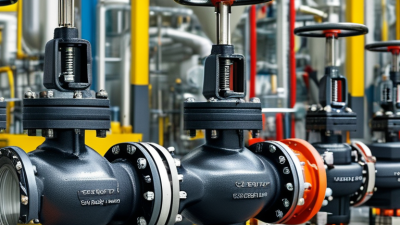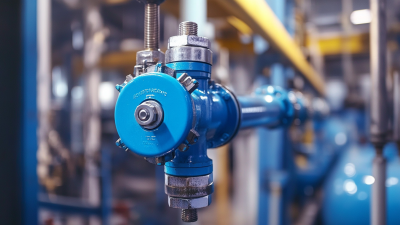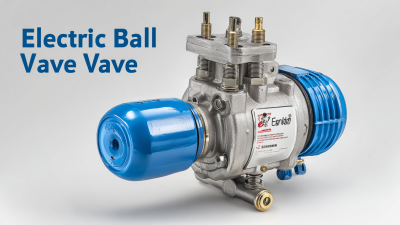
Choosing the 2026 top Pneumatic Operated Ball Valve manufacturers requires more than comparing catalog prices. Buyers should examine torque accuracy, body materials, actuator response, sealing performance, and documented service life. A valve may look excellent on paper. Field conditions can disagree.
Dr. David W. Spitzer, an instrumentation and control specialist, offers a practical reminder: “A valve is not an isolated component; it is part of a control loop.” That principle matters when reviewing pneumatic actuators, solenoid valves, position feedback, and emergency-shutdown arrangements. A dependable manufacturer should explain how its products perform under pressure cycling, temperature changes, corrosive media, and repeated switching. It should also provide traceable testing records, clear datasheets, and responsive technical support.
Field evidence matters. Not just catalogs.
This guide evaluates leading manufacturers through engineering capability, production consistency, customization, certification practices, and customer experience. Important references may include ISO 5211 mounting compatibility, ISO 9001 quality systems, and application-specific safety requirements. However, certification alone does not guarantee excellent performance. Installation errors, poor air quality, incorrect sizing, and neglected maintenance can shorten valve life dramatically.
The ranking may still contain judgment. Public data is uneven, and regional service quality changes the buying decision. That limitation deserves attention. A global brand may not be the best choice for every plant. Smaller manufacturers can offer stronger customization and faster communication. The strongest Pneumatic Operated Ball Valve supplier is the one that combines proven hardware with honest engineering support, stable delivery, and measurable after-sales responsibility.
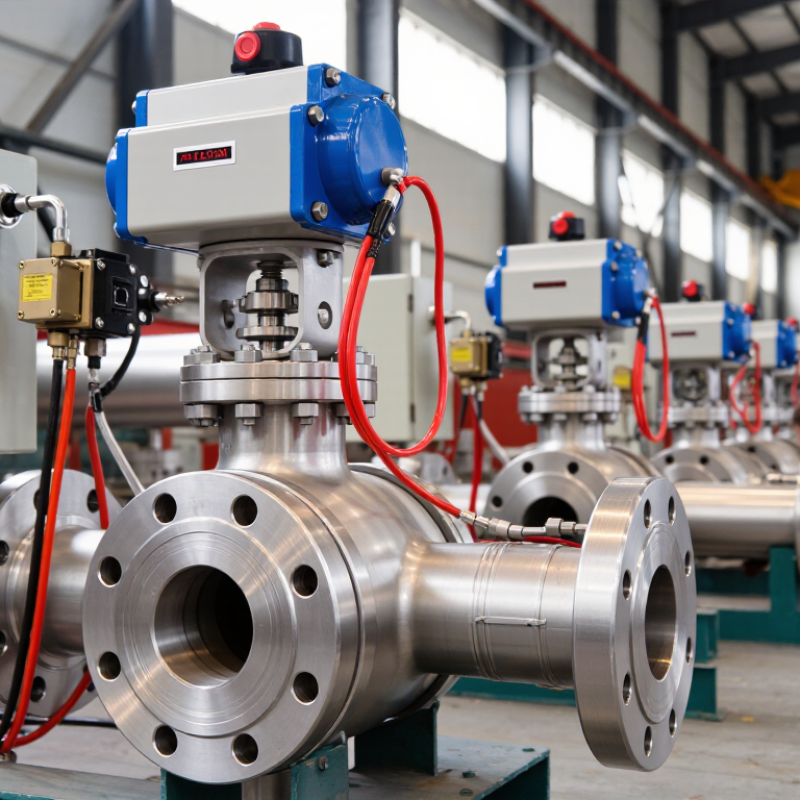
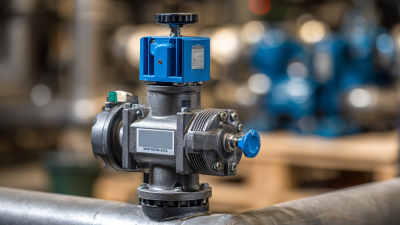
A pneumatic operated ball valve uses compressed air to rotate a ball inside a valve body. The ball contains a drilled passage that opens or blocks fluid flow. When air enters the actuator, it moves the stem, usually through a quarter-turn of 90 degrees. This action changes the valve from open to closed, or the reverse.
The assembly normally includes a valve body, ball, stem, seals, and pneumatic actuator. A solenoid valve controls the air signal, while a position indicator shows the ball’s status. In a factory line, the actuator may close the valve within seconds when a control signal changes. That response suits water treatment, process equipment, compressed air systems, and many fluid-handling applications.
Air pressure and fluid conditions must match the valve design. Check the media temperature, pressure, viscosity, and chemical compatibility before selection. Stainless steel may suit corrosive service, while reinforced sealing materials can support demanding cycles. A spring-return actuator can move the valve to a safer preset position after air loss. Double-acting versions need air for both opening and closing.
Small details matter.
In field maintenance, blocked filters or wet air can slow actuator movement. Misaligned piping may also stress the valve body and shorten seal life. I have found that installation drawings look perfect, but actual pipework often needs adjustment. Regular leak checks, clean instrument air, and correct torque settings support dependable operation. Yet no valve is universal; testing the complete assembly under real conditions remains necessary.
A pneumatic operated ball valve uses compressed air to rotate a quarter-turn actuator, moving the ball between the open and closed positions. The chart shows representative pressure ratings for common ASME B16.34 pressure classes at approximately 100°F (38°C) for WCB carbon steel. Actual ratings depend on material, temperature, valve design, and applicable standards.
Higher pressure classes require a valve body and pneumatic actuator with suitable pressure and torque capability. Pressure class is not a manufacturer ranking; it is a standardized design category used when selecting industrial ball valves.
In 2026, pneumatic ball valve manufacturers are evaluated beyond price and catalog claims. Buyers examine pressure ratings, operating temperature, leakage control, and cycle life. A serious manufacturer should provide test reports, material certificates, and traceable production records. Factory audits also reveal practical details, such as clean assembly areas and calibrated testing equipment.
Field experience carries real weight. Engineers review valve response time, actuator sizing, seal performance, and failure behavior under repeated operation. They may request samples for endurance testing, especially in dusty, humid, or corrosive environments. Clear installation instructions matter too. A reliable supplier explains maintenance intervals, spare parts, and safe pneumatic pressure ranges without hiding limitations.
Digital documentation is becoming more important in 2026. Manufacturers are expected to offer consistent drawings, inspection data, and responsive technical support. Independent certifications can strengthen credibility, but certificates alone cannot prove long-term performance. A polished catalog proves little. No evaluation is perfect. Even experienced buyers may overlook a small issue, such as slow replacement support or unclear seal compatibility. The strongest assessment combines factory evidence, tested products, customer feedback, and honest answers when performance falls short.
In 2026, leading pneumatic ball valve manufacturers will compete through control accuracy, durability, and measurable plant efficiency. Grand View Research estimates the global industrial valves market will expand at about 4.8% annually through 2030. That growth increases pressure on manufacturers to improve more than basic shutoff performance.
Modern designs commonly use quarter-turn pneumatic actuators with optimized torque curves. NAMUR-mounted solenoid valves shorten tubing and reduce response delays. ISO 5211 interfaces also simplify actuator installation and replacement. In demanding pipelines, double-piston racks can deliver stronger closing force within compact housings. Engineers increasingly add digital positioners, cycle counters, and pressure sensors. These tools help detect seal wear before leakage becomes visible.
The data matters. A 2024 report by MarketsandMarkets identifies process automation and predictive maintenance as major drivers for smart valve adoption. Yet, smart electronics cannot repair poor sizing or unstable air pressure. That is often overlooked. Air consumption, actuator safety position, and valve torque should be verified under real operating temperatures. API 6D and ISO 5208 testing also provide practical benchmarks for pressure integrity and seat leakage. Still, standards do not remove every risk. Dust, moisture, and irregular maintenance can shorten service life, even in well-tested assemblies.
| Technology or Design Feature | Typical Technical Data | Common Standards or References | Operational Benefit | Typical Application |
|---|---|---|---|---|
| Quarter-Turn Pneumatic Actuation | 90° rotation; double-acting or spring-return configuration; commonly designed for compressed air supplies around 3–8 bar | ISO 5211; VDI/VDE 3845 | Fast open-close operation and compatibility with automated process-control systems | Water treatment, utilities, chemical processing and general industrial isolation |
| Rack-and-Pinion Actuator | Compact aluminum or stainless-steel body; output torque commonly selected from below 10 N·m to several thousand N·m, depending on valve size and pressure | ISO 5211 mounting interface; applicable pneumatic actuator design requirements | High power-to-weight ratio, repeatable travel and simple maintenance | Ball valves requiring frequent automatic cycling |
| Spring-Return Fail-Safe Design | Fail-open or fail-closed action using preloaded springs; final position depends on actuator orientation and process safety analysis | IEC 61508 principles may be applied in safety-related systems; ISO 5211 for mounting | Moves the valve to a defined position after loss of air or control signal | Fuel gas, emergency shutdown, burner management and hazardous-process systems |
| Reduced-Port and Full-Port Ball Geometry | Full-port designs minimize flow restriction; reduced-port designs use a smaller bore to reduce valve size, weight and cost | API 6D; ISO 17292; ASME B16.34 | Allows selection between lower pressure loss and a more compact installation | Pipeline isolation, compressed air, steam, water and process-fluid service |
| Anti-Static Construction | Conductive ball-stem-body path designed to limit electrostatic charge accumulation; continuity is verified during testing | ISO 17292; API 6D; ASME B16.34 | Reduces the risk of ignition caused by static discharge in suitable hazardous services | Hydrocarbon, solvent, fuel and other flammable-fluid systems |
| Blowout-Proof Stem | Stem retained from inside or by an external shoulder so that internal pressure cannot eject the stem during normal operation | ASME B16.34; API 6D; ISO 17292 | Improves personnel protection and mechanical integrity under pressure | Pressurized gas, liquid and process-piping installations |
| Double Block and Bleed Configuration | Two seating surfaces isolate the line; a cavity-vent or bleed connection can release trapped pressure between the seats | API 6D; ISO 14313; applicable pipeline specifications | Supports isolation verification and safer maintenance procedures | Oil and gas transmission, storage terminals and critical process lines |
| Fire-Safe Construction | Secondary metal sealing features maintain containment after soft-seat damage during a standardized fire test | API 607; ISO 10497 | Limits external leakage and helps preserve operability after fire exposure | Refineries, chemical plants, fuel systems and hydrocarbon processing |
| Low-Emission Stem Sealing | Live-loaded graphite or advanced packing systems; fugitive-emission performance is verified by a defined test method | ISO 15848-1/-2; API 641; applicable local emission regulations | Reduces atmospheric leakage from the stem area during cycling and service | Volatile organic compound service and regulated chemical facilities |
| Seat Material Engineering | PTFE and reinforced PTFE are common for many chemical and water services; PEEK, metal or graphite-based seats are selected for higher temperature, pressure or abrasion | ISO 17292; API 6D; manufacturer temperature and media compatibility data | Balances chemical resistance, torque, temperature capability and shutoff performance | Water, chemicals, steam, abrasive slurries and high-temperature processes |
| Corrosion-Resistant Body Materials | Carbon steel, stainless steel, duplex stainless steel and special alloys are selected according to pressure, temperature and fluid chemistry | ASTM material specifications; NACE MR0175/ISO 15156 for applicable sour-service environments | Improves service life and resistance to internal or external corrosion | Offshore, chemical, seawater, sour-gas and general industrial systems |
| NAMUR Solenoid and Accessory Integration | Solenoid valves, position indicators, limit switches, filter-regulators and positioners can be mounted using standardized interfaces | VDI/VDE 3845; IEC 60534-6-2 for applicable control-valve accessories | Simplifies installation, wiring, commissioning and replacement of automation accessories | Distributed control systems, PLC-operated skids and packaged equipment |
| Position Feedback and Diagnostics | Open/closed limit switches, proximity sensors, visual indicators and optional digital position monitoring | IEC 60947-5-2 for applicable proximity sensors; IEC 61508 where safety functions are claimed | Provides confirmation of valve status and supports predictive maintenance strategies | Remote pumping stations, process automation and safety-interlock systems |
| Pressure and Leakage Testing | Hydrostatic shell testing, seat leakage testing and functional cycling are performed according to the specified product class and test procedure | API 598; ISO 5208; API 6D; ISO 17292 | Confirms pressure integrity, shutoff performance and actuator-valve compatibility | All critical industrial and process-fluid installations |
| Digital Manufacturing and Traceability | Computerized torque sizing, CNC machining, material certificates, heat-number tracking and serialized final inspection records | ISO 9001 quality-management practices; applicable customer inspection requirements | Improves dimensional consistency, documentation quality and lifecycle support | Engineered-to-order valves and safety-critical process packages |
Note: Technical values are representative industry ranges and selection references. Actual pressure, temperature, torque, materials and leakage performance depend on valve size, pressure class, fluid properties, seat design and the applicable certification requirements.
The 2026 comparison of pneumatic operated ball valve manufacturers should focus on application fit, not catalog size. Grand View Research valued the global industrial valves market at approximately USD 77.7 billion in 2023. It projects a 4.8% compound annual growth rate through 2030. MarketsandMarkets reports different figures because its market scope and product categories differ. That gap matters. Buyers should check definitions before comparing supplier claims.
A practical comparison begins with pressure rating, body material, seal compatibility, and actuator torque. Stainless steel suits corrosive lines, while carbon steel can reduce cost in controlled environments. ISO 5211 mounting improves actuator interchangeability. A reliable design should also include a torque margin, usually 20% to 30% above the valve’s breakaway requirement. Too little margin causes incomplete opening. Too much may accelerate seat wear.
Maintenance data deserves equal attention. Pneumatic systems need clean, dry air, and poor filtration can damage positioners and seals. Look for cycle-test evidence, leakage results, spare-part availability, and documented quality controls. Ask whether tests follow recognized standards, such as ISO 5208 for valve pressure testing. The ranking is not absolute. A compact valve may outperform a larger model in a tight chemical skid, but fail in abrasive service. That is where many comparisons become shallow. A small field trial, with real pressure and temperature, often reveals more than a polished brochure.
Selecting a pneumatic ball valve manufacturer requires more than comparing catalog prices. MarketsandMarkets’ 2023 Industrial Valves Market report estimated the sector at USD 78.6 billion and projected USD 101.9 billion by 2028. That growth increases supplier choices, but not necessarily supplier quality.
Request material certificates, pressure-test records, and actuator sizing calculations. The valve should match the medium, temperature, pressure, and required cycle frequency. Ask whether the manufacturer tests complete valve-and-actuator assemblies, not only separate components. A valve may operate perfectly on a bench yet fail after dust, vibration, or repeated cycling. Small details matter. Look for traceable serial numbers and documented quality procedures.
Compressed air efficiency also deserves attention. The U.S. Department of Energy reports that compressed-air systems can lose 20–30% of their output through leaks and poor maintenance. Choose a manufacturer that publishes air-consumption figures and offers practical maintenance guidance. Confirm fail-open or fail-closed behavior during air loss. Also check ISO 5211 mounting compatibility, enclosure protection, corrosion resistance, and available spare parts.
A low quotation can look sensible. It may hide weak seals or undersized actuators. In real plant inspections, incorrect torque calculations are common and expensive. I would still challenge my own checklist: laboratory data cannot fully predict dirty service, rushed installation, or irregular maintenance. Ask for references from similar operating conditions, independent test evidence, and a clear warranty process. Supplier responsiveness is part of technical quality.