How to Choose the Right Casting Ball Valve for Your Needs?
When it comes to selecting the right Casting Ball Valve, the process can be daunting. Industry expert John Smith states, "Choosing a valve is as important as the system it serves." This highlights the critical role of Casting Ball Valves in various applications, from water supply to industrial processes.
Understanding your specific needs is essential. You must consider factors like pressure ratings, materials, and sizes. Choosing incorrectly may lead to inefficiencies or even failures. A well-chosen Casting Ball Valve ensures operational reliability; a poorly chosen one can create headaches.
Your system's demands should guide your decision. It's not just about picking any valve; it's about matching it perfectly with your requirements. Take your time to evaluate options. This investment in care can yield long-term benefits. Remember, in the world of Casting Ball Valves, the right choice is vital for success.
Understanding the Basics of Casting Ball Valves
Casting ball valves are essential in various industries. They control the flow of liquids and gases effectively. Understanding their basic components is crucial for making an informed choice. A typical casting ball valve has a spherical disc that sits inside the valve body. This disc rotates to open or close the valve. It’s important to know what materials are best for your specific application.
When selecting a casting ball valve, consider the pressure and temperature ratings. Not all valves can handle extreme conditions. Your choice will impact your system’s efficiency. A mismatch can lead to leaks or failure. Additionally, examine the sealing mechanisms. High-quality seals last longer and require less maintenance.
Tips: Check compatibility with your piping system. Measure dimensions carefully. A small error can cause installation issues. Also, review manufacturer specifications. Look for industry certifications to ensure reliability. Keep in mind that sometimes, lower initial costs may lead to higher maintenance expenses later. Choose wisely.
How to Choose the Right Casting Ball Valve for Your Needs?
This chart illustrates the different materials used in casting ball valves and their respective performance ratings based on resistance to temperature, corrosion, and pressure.
Identifying Your Specific Application Requirements
Choosing the right casting ball valve begins with understanding your specific application requirements. Factors like pressure, temperature, and flow rates are crucial. For example, a study by the American Society of Mechanical Engineers (ASME) highlights that nearly 30% of valve failures stem from misapplications. It’s vital to analyze these elements before making a selection.
Consider the materials involved. A report by the Valve Manufacturers Association (VMA) states that nearly 70% of industrial applications require specific materials to withstand corrosive conditions. This often means selecting a valve that not only fits your operational criteria but suits the environment it will face. You might need to reflect on whether a standard option suffices or a custom solution is necessary.
Assessing the scalability of your operations matters too. As reported in various industry forecasts, demand fluctuates with market conditions. If you anticipate growth, choose a valve design flexible enough to adapt. However, be prepared—there are often trade-offs between cost and performance in such situations. Every detail counts, and making a choice often involves weighing immediate needs against long-term goals.
Evaluating Material Options for Durability and Compatibility
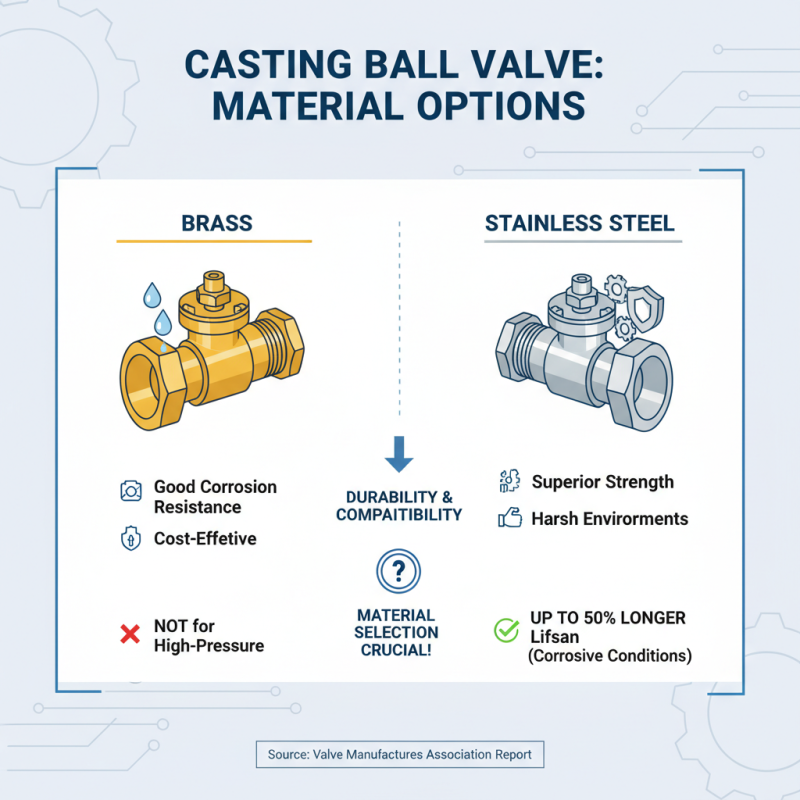
When choosing a casting ball valve, material selection is crucial for durability and compatibility. Metals like brass and stainless steel are common choices. Brass offers good corrosion resistance and is cost-effective. However, it may not withstand high-pressure applications, which can be a critical factor in certain industries. Stainless steel, on the other hand, provides better strength and resistance in harsh environments. A report from the Valve Manufacturers Association indicates that stainless steel valves can last up to 50% longer than their brass counterparts in corrosive conditions.
Compatibility with the fluid being handled is another essential consideration. Certain materials can react negatively with different substances. For example, plastic valves may be suitable for water but fail in chemical applications. According to industry data, using the appropriate valve material can reduce maintenance costs by 30%. It’s vital to assess the fluid's temperature, pressure, and chemical composition before making a selection. Misalignment in material choice can lead to system failures and increased downtime, which often go unaccounted for in project budgets.
Evaluating these material options requires expertise and a clear understanding of operational conditions. It's important to consult relevant studies or industry guidelines, as this can significantly impact decision-making. Remember, choosing the right material is not just about immediate costs; it is about long-term performance and reliability. Potential pitfalls in material selection could lead to significant operational setbacks.
Assessing Size and Flow Rate Considerations
When selecting the right casting ball valve, size and flow rate are critical factors. The valve size must match the pipeline diameter. Incorrect sizing can lead to inefficiencies. A valve that is too large may reduce pressure, while a small valve can restrict flow. According to industry data, flow rates can vary significantly, ranging from 10 to over 2,000 gallons per minute. Assessing these metrics ensures optimal performance.
Flow rate considerations vary by application. For example, systems that handle viscous materials may require different specifications compared to those carrying water. A detailed analysis of the intended use is essential. Calculating the flow rate is crucial; deviations can cause cavitation or system failures. Research indicates that a 20% difference in expected flow can lead to equipment malfunctions.
Understanding the context of these metrics fosters better decision-making. It's important to consider the long-term impact of improper valve selection. Regular consultation with industry experts can enhance accuracy in choosing valves. Reflecting on past choices can reveal patterns leading to inefficiency. Therefore, continuous learning in valve technology is vital for sustainable operations.
Analyzing Valve Features for Enhanced Functionality
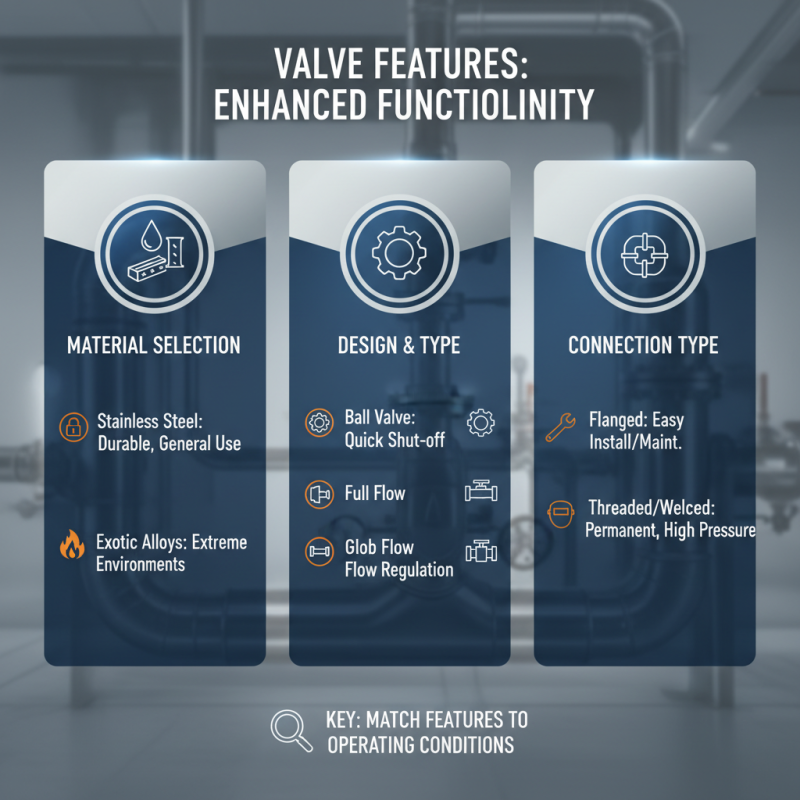
Choosing the right casting ball valve involves understanding its features and how they impact functionality. When analyzing valve features, material selection plays a crucial role. Different materials offer various benefits and drawbacks. For example, stainless steel is durable but may not perform well in extreme environments. Consider the specific conditions where the valve will be used.
Another key feature is the valve's sealing mechanism. A reliable seal prevents leaks and ensures efficiency. However, not all seals are created equal. Some may wear out quickly under high pressure. It's essential to evaluate the expected lifespan of the seal in your application. Evaluate whether the valve can handle the required temperature and pressure.
Consider the size of the valve and port configuration. A larger valve may allow for higher flow rates, but it can also create challenges in installation and maintenance. Some users overlook these factors, leading to complications down the line. Assess your needs thoroughly. Proper analysis can save significant time and resources later on.