- Home
- Products
- About Us
- Application Cases
- CLIENT & FACTORY
- Test
- News
- Contact Us
Leave Your Message
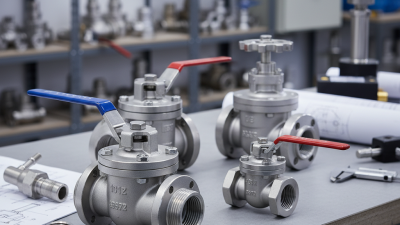
Stainless Ball Valves are compact flow-control devices used in water systems, chemical lines, food processing, and industrial equipment. Their polished bodies may look simple, but their performance depends on precise engineering, correct materials, and careful installation. Philip L. Skousen, a recognized valve-industry author, wrote, “The primary function of a valve is to control the flow of fluid through a pipeline.” That principle explains the role of every ball valve, including stainless-steel designs.
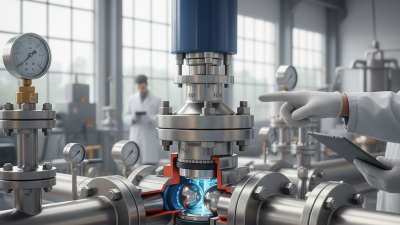
Inside the valve, a drilled metal sphere rotates between two sealing seats. A quarter-turn of the handle aligns the bore with the pipeline and opens the passage. Another quarter-turn places the solid side across the flow and stops it. The stem transfers movement from the handle to the ball. PTFE or other seat materials help create a tight seal. Simple movement. Demanding results.
This guide explores what Stainless Ball Valves are, how they operate, and why stainless steel is selected for demanding environments. Grades such as 304 and 316 offer different resistance to moisture, chemicals, and salt exposure. However, a stainless body does not make every service safe. Temperature, pressure, fluid compatibility, and seat limitations still matter. That detail is easy to overlook. A valve can appear perfect while its seal slowly weakens under unsuitable conditions. We will also examine full-port and reduced-port designs, common connection types, maintenance concerns, and practical selection factors. The goal is useful understanding, not exaggerated certainty. Proper sizing and manufacturer documentation remain essential.
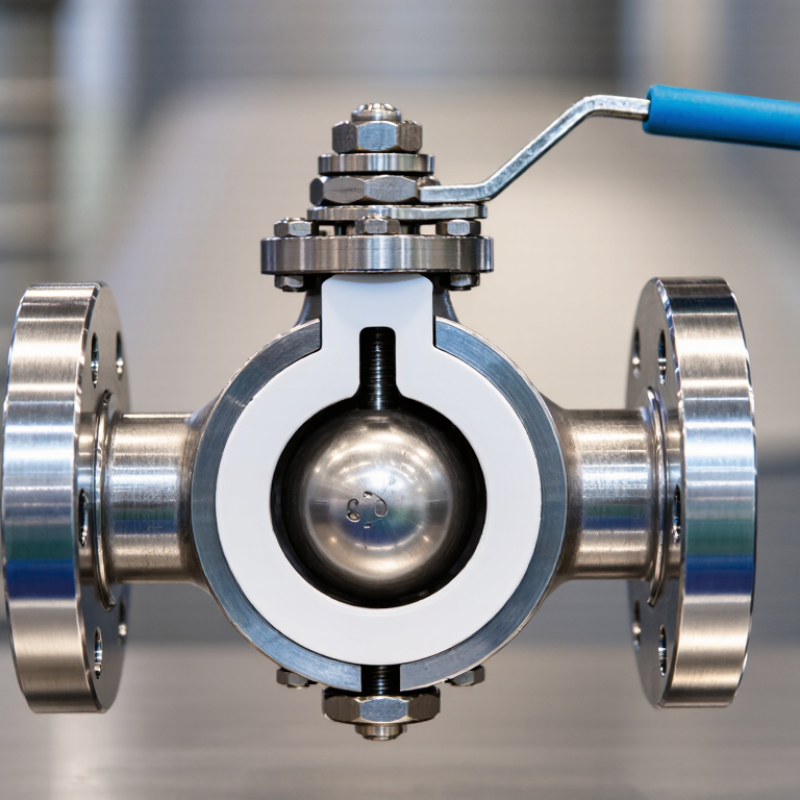
A stainless ball valve is a shutoff device with a round, drilled ball inside its body. When the handle turns, the ball rotates about 90 degrees. The bore then aligns with the pipe, allowing fluid to pass. Turn the handle across the pipe, and the solid side blocks the flow. This simple movement makes the valve fast and practical for water, air, oils, and many chemical services.
The valve body, ball, stem, and handle work together under pressure. Sealing seats press against the ball to reduce leakage. Stainless steel offers strong corrosion resistance and a clean surface, but it is not immune to damage. The correct steel grade, seat material, pressure rating, and temperature range must match the application. A valve that looks suitable may still fail early. That detail is easy to overlook.
Tips: Check the flow arrow and pressure rating before installation. Keep the pipe properly supported. Do not use the handle to force a stuck valve. During maintenance, inspect the stem area for moisture, deposits, or unusual resistance. A quarter-turn valve should move smoothly, although perfectly effortless operation is not always realistic. If the handle feels loose or the valve leaks after closing, investigate the cause instead of tightening everything blindly.
| Aspect | Description | Key Data or Typical Characteristics | Why It Matters |
|---|---|---|---|
| Definition | A stainless ball valve is a shut-off valve that uses a spherical ball with a drilled passage to control the flow of a fluid or gas. | The ball rotates inside the valve body and is commonly operated by a handle, actuator, or automated drive. | Its simple design provides fast, reliable isolation in many industrial, commercial, and residential systems. |
| Operating Principle | Turning the stem rotates the ball inside the valve seat. The passage aligns with the pipeline when the valve is open and turns across the pipeline when it is closed. | Standard operation is approximately a 90-degree, or quarter-turn, rotation. | Quarter-turn operation allows quick shut-off with a clear visual indication of the valve position. |
| Main Flow Positions | The valve normally operates in two primary positions: fully open and fully closed. | Fully open: the bore is aligned with the pipe. Fully closed: the bore is perpendicular to the pipe. | Ball valves are generally selected for on/off service rather than continuous throttling. |
| Valve Body | The body contains the ball, seats, stem, and fluid passage. It may be produced in one-piece, two-piece, or three-piece construction. | Two-piece and three-piece designs can support inspection or maintenance more easily than many one-piece designs. | Construction affects serviceability, installation requirements, and the ability to replace internal components. |
| Common Stainless-Steel Grades | Stainless steel is used for the body and other wetted or external components, depending on the valve design. | 304 stainless steel is widely used for general corrosion resistance. 316 stainless steel provides improved resistance to chlorides and many chemical environments. | The selected grade should match the fluid, temperature, chloride exposure, and surrounding environment. |
| Ball and Stem | The ball provides the flow passage, while the stem transfers the turning force from the handle or actuator to the ball. | Common ball configurations include full-port and reduced-port designs. The stem may be top-entry or inserted through the valve body, depending on construction. | Port size influences flow capacity and pressure loss, while stem design affects operation and safety features. |
| Valve Seats | Seats form the seal between the rotating ball and the valve body, limiting leakage when the valve is closed. | Many general-purpose valves use polymeric seats such as PTFE or reinforced PTFE. Seat temperature and chemical limits vary by material. | Seat compatibility often determines whether the valve can safely handle a particular fluid and operating temperature. |
| Flow Capacity | Flow capacity depends on the nominal port size, bore design, pressure drop, fluid properties, and valve construction. | A full-port ball valve has a bore close to the connected pipe diameter and typically produces lower flow restriction than a reduced-port valve. | Selecting the correct port design helps balance flow performance, cost, and installation requirements. |
| Pressure and Temperature Ratings | Pressure and temperature limits are determined by the body, wall thickness, seats, seals, connections, and applicable design standard. | There is no single pressure or temperature rating for all stainless ball valves; the rating must be taken from the specific product specification or nameplate. | Operating beyond the lowest-rated component can cause leakage, seat damage, or valve failure. |
| End Connections | Stainless ball valves may connect to piping using threaded, socket-weld, butt-weld, flanged, or sanitary-style ends. | The connection type must match the pipe material, nominal size, pressure class, and installation method. | Correct end connections support leak-free installation and compatibility with the existing piping system. |
| Typical Applications | Common uses include water service, compressed air, gas systems, process piping, chemical handling, food processing, and pharmaceutical utilities. | Application suitability depends on the fluid, concentration, temperature, pressure, cleanliness requirements, and valve materials. | Stainless construction is useful where corrosion resistance, durability, or cleanability is important. |
| Advantages | Stainless ball valves offer compact construction, quick operation, good shut-off performance, and strong resistance to many corrosive environments. | The straight-through flow path of a full-port design can reduce turbulence and pressure loss when fully open. | These features make the valve suitable for frequent isolation and space-limited installations. |
| Limitations | Ball valves are not universally suitable for abrasive slurries, severe throttling, or fluids that may damage the selected seats and seals. | Partially open operation can increase wear, turbulence, and seat damage in unsuitable services. | A different valve type or specialized construction may be better for regulating flow or handling abrasive media. |
| Maintenance | Maintenance typically includes checking for external leakage, confirming smooth operation, inspecting connections, and replacing worn seats or seals when the design permits. | The pipeline should be depressurized and isolated before inspection, disassembly, or repair. | Proper maintenance improves service life and reduces the risk of unexpected leakage or downtime. |
| Selection Checklist | Select the valve by considering size, pressure, temperature, fluid compatibility, stainless-steel grade, seat material, port design, end connection, and actuation method. | The valve rating must meet or exceed the system requirements under the actual operating conditions. | A complete selection review helps ensure safe operation, reliable sealing, and long-term compatibility. |